Friday, May 19, 2017


Queen Elizabeth I, an Absolutist
By John Richardson
G Block


Queen Elizabeth I displayed true power and strength during her reign, making her an absolute monarch to be reckoned with. She proved that everything isn’t always as it may seem; she was at first viewed as a small and week woman with a feint heart, but that idea of her quickly changed because of her self confidence and bold decisions. An absolute monarch is one that calls all the shots with not really any, or significantly less, input from others, compared to other governments. This requires self assurance which is what Queen Elisabeth possessed. If an absolute monarch is unsure of their self and holds back, then it either 1: makes their nation vulnerable to be taken over, and/or 2: makes it easy for other people to manipulate their decisions, and if the ruler isn't really calling the shots, then that defeats the purpose of an absolute monarch. For Elizabeth, that wasn’t the case. She stuck to her guns, and as a result, she lead England to success.


Queen Elizabeth was born in 1533, and her parents were Henry VIII and Anne Boleyn. She never married or had kids. When she came to power in 1558, England was not exactly at its finest. The Catholics and Protestants were fighting and the royal treasury had been spent by Mary, Queen of Scots. On top of that, France posed a threat to England. Elizabeth gained custody over Mary in 1568. Mary sided with the Catholics and secretly tried to overthrow Elizabeth because of her pro-protestant beliefs. Each time she and the Catholics tried, they failed, and when Elizabeth found out, she ordered Mary to be executed in 1587. This shows that Elizabeth did not hesitate on taking down her enemies and keeping her pro-protestant stance, even though it was controversial to some people.


All throughout the 16th century, Spain dominated Europe with their army and their wealth. King Philip II, ruler of Spain, was concerned with the protestant rebels in The Netherlands. Spain wanted to keep Catholicism in place throughout Europe and the rebels posed a threat to that. Queen Elizabeth aided the rebels to stop Catholicism and allowed private english ships to attack Spanish ships. This is where the the tension with Spain and England began to grow and Philip II ordered and Armada to set sail towards England. It consisted of 130 ships, carrying 1,100 cannons, and 30,000 men. Queen Elizabeth faced a great challenge and she took it head on.


Queen Elizabeth showed people that she is'nt afraid to not hold back and defend her nation. King Philip II of Spain proposed to her and she declined. Then, Philip sent his armada to England to take it over. He wanted to cut England off from aiding the pro-protestant rebels in The Netherlands. Queen Elizabeth had no intent of holding back, and there was most likely some personal tension between Philip II and Elizabeth after she denied his marriage proposal. “I know I have but the body of a weak and feeble woman; but I have the heart of a king, and of a king of England, too; and think foul scorn that Parma or Spain, or any prince of Europe, should dare to invade the borders of my realms”. This quote is one of the best examples of how Queen Elizabeth I held her own. She states that her appearance may look weak but that she is just as, if not more, powerful and strong as a king, which back then, might of seemed surprising to people. She proved this by crushing King Philip II’s army in war. She not only defended her nation, but she caused England to emerge as the world’s most powerful naval force.

Queen Elizabeth I proved herself as a powerful absolute monarch. She did not hold back when it came to battle and that took people off guard because of her elegant appearance. She took a stand against Catholicism even though that was disliked by many. When Spain came to take over England to eliminate the pro-protestant ways, Queen Elizabeth stood strong and defeated King Philip the 2nd's daunting armada. Elizabeth was bold, self confident, and strategic which made her an incredible absolute monarch.


Work cited:

            "Elizabeth I: Act against Puritans (1593)." World History: The Modern EraABC-CLIO, 2017,
            worldhistory.abc-clio.com/Search/Display/1807185. Accessed 19 May 2017.

"Elizabeth I: Speech against the Spanish Armada (1588)." World History: The
            Modern EraABC-CLIO, 2017, worldhistory.abc-clio.com/Search/Display/354572. Accessed 19 May 2017.

"Elizabeth I (1558-1603 AD) A Queen With the Heart of a King" Britannia, 2017, 
            britannia.com/history/monarchs/mon45.html. Accessed 19 May 2017.

Valente, Jose. "Philip Ii." World History: The Modern EraABC-CLIO, 2017, worldhistory.abc-

            clio.com/Search/Display/305362. Accessed 19 May 2017.


Thursday, May 18, 2017

Frederick II (The Great) of Prussia

Frederick the Great


Frederick II (1712-1786) ruled Prussia from 1740 until his death. He was also known as Frederick the Great, leading Prussia with his strong military tactics expanding and consolidating Prussian lands. Frederick II was an enthusiast of the patron of the arts and sciences, as well as being a gifted musician. Although, Frederick’s rule was an absolute monarchy, with him having complete control of everything in Prussia, Frederick’s reign was very successful. What made Frederick II so great is that he was unique and his tough childhood, having different interests from his father and being scorned and punished about it, led  him to be stronger and more well-rounded. His talents and love for music and the arts makes Frederick unique from all the other leaders, helping him rule absolutely, not being negligent of the arts but promoting them. Along with that, Frederick was a military genius, not afraid to attack, and very smart in his tactics. Frederick II had a very successful reign throughout his life, and it made an impacting impression throughout time.

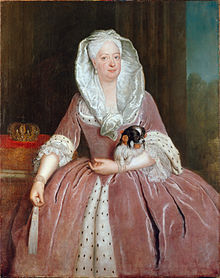
Queen Sophie Dorothea of Prussia.jpg
Sophia Dorothea of Hanover

Frederick William I, Frederick II’s father, was a Calvinist who ruled both his household and kingdom sternly, and did not tolerate foolishness. Frederick II was his oldest surviving son, two sons of which both died in infancy. Sophia Dorothea of Hanover, Frederick’s mother, took care of him and spoke French to him a lot of the time, which in time, sprouted Frederick’s love of French culture. Frederick William’s love towards Frederick II was destroyed when he found out their strongly different personalities. Frederick William I ordered Frederick II to have little education, live a simple Protestant life, and focus on the army, just like himself, but Frederick II defied his father, interested in music, books and French culture, which were forbidden for being sinful and unmanly by his father. Frederick II was beaten and humiliated for his defiance of his father, and did not particularly have a good childhood. At one point, Frederick II attempted to flee with his tutor, Hans Hermann von Katte, but they were caught, and his father forced him to marry Princess Elizabeth of Brunswick-Wolfenbüttel-Bevern, and also beheaded Katte, who was also his best friend. Frederick II was put in prison in the Fortress of Küstrin from September 2nd to November 19th in 1731, and studied agriculture, economy and administration. Frederick II became on all right terms with his father, when he passed away on May 31, 1740 and Frederick came to power as king. Frederick II had to grow up accepting that his father did not like his different ideas and beliefs, but Frederick let them bleed through during his reign.
Frederick William I


Frederick II’s love for the arts helped him lead a better well-rounded nation. While Frederick continued his military studies, under his father, Frederick was writing flute sonatas and letters to Voltaire on the side. In 1739, he published a philosophical falsification of Machiavelli, unaware that he would gain the throne in 1740. He was a poet and writer, and wrote many poems and 30 books, while he composed music. Although Frederick William I did not want Frederick II to wear fancy clothing and be a man, Frederick II wore fanciful clothes and would be considered “gay” surrounded by the Prussian society. When Frederick took over the throne in 1740, he immediately launched a battle in a war, but he had not forgotten about the arts. In 1746, Frederick the Great presented a musical theme he had written to composer Johann Sebastian Bach, who repeated a part of the music over throughout his piece he titled, “The Musical Offering.” The arts Frederick displayed helped people view him as inspiring. This helped his people to appreciate him for his ways of thinking.
Frederick II claimed the throne on May 31, 1740, and not long after that he launched an unprovoked attack on the Austrian region of Silesia. This triggered the eight-year War of Austrian Succession which led to many good things that helped Prussia, and started off Frederick's rule strong. His father had drilled the army to perfection, so Frederick used it to the best of his ability and held Silesia, as well as invaded Bohemia with an army of 140,000. He was driven back by some defeats in Austria, but it led to treaty negotiations in 1748. Following the eight year war, Frederick was considered a military genius and was given the name “Frederick the Great.” Later in 1756, Europe’s longstanding alliances changed around during the so-called Diplomatic Revolution, in which Frederick built up piece as well as his army, in which he attacked Austria’s ally Saxon out of surprise. Frederick built up his daring tactical victories, but the war finally came to end when Russia suddenly withdrew in 1762. Frederick the Great gained fame for his able administration of his country, his cultural interests and attainments, and his organization and leadership of Prussia’s military forces. Frederick proved himself a very great general, in which military men often mention his name in the same breath with the names of Gustavus Adolphus, Hannibal, and Marlborough, which says a lot. Frederick II was a force to be reckoned with, leading Prussia in long strategic wars.
Through Frederick II’s hardship with his father, love for the arts, and great military tactics, Frederick was a very good absolute monarch. Frederick learned a lot from his father, as well as what not to do, having good and strong ideas already in mind when he came to power. His love for the arts made him more versatile, as well as unique. Lastly, his military tactics were strong and powerful, still being looked upon until today. Frederick is often remembered as the father of Prussian militarism, but his reign was much more than that, which made him a good absolute monarch.


Works Cited

 Eyck, Erich. "Frederick the Great." History Today, 1955, pp. 4:10 (Oct. 1954): 651, History Study Center.


"Frederick II, King of Prussia." The Columbia Encyclopedia, Paul Lagasse, and Columbia University,

Columbia University Press, 2017. Credo Reference,
http://literati.credoreference.com/content/entry/columency/frederick_ii_king_of_prussia/
0. Accessed 10 May 2017.
"Frederick II (The Great) of Prussia." Then Again. N.p., n.d. Web. 10 May 2017.
"Frederick William I." The Columbia Encyclopedia, Paul Lagasse, and Columbia University, Columbia
University Press, 2017. Credo Reference,
http://literati.credoreference.com/content/entry/columency/frederick_william_i/0. Accessed 10
May 2017.
Kyte, George W. "Frederick the Great and the Development of the Prussian Army." Historian; a Journal
of History, 1950, pp. 5:1 (Autumn 1942): 24, History Study Center.
Munger, Michel. "Frederick the Great Biography." Mungerca RSS. N.p., n.d. Web. 05 May 2017.