Friday, May 19, 2017


Queen Elizabeth I, an Absolutist
By John Richardson
G Block


Queen Elizabeth I displayed true power and strength during her reign, making her an absolute monarch to be reckoned with. She proved that everything isn’t always as it may seem; she was at first viewed as a small and week woman with a feint heart, but that idea of her quickly changed because of her self confidence and bold decisions. An absolute monarch is one that calls all the shots with not really any, or significantly less, input from others, compared to other governments. This requires self assurance which is what Queen Elisabeth possessed. If an absolute monarch is unsure of their self and holds back, then it either 1: makes their nation vulnerable to be taken over, and/or 2: makes it easy for other people to manipulate their decisions, and if the ruler isn't really calling the shots, then that defeats the purpose of an absolute monarch. For Elizabeth, that wasn’t the case. She stuck to her guns, and as a result, she lead England to success.


Queen Elizabeth was born in 1533, and her parents were Henry VIII and Anne Boleyn. She never married or had kids. When she came to power in 1558, England was not exactly at its finest. The Catholics and Protestants were fighting and the royal treasury had been spent by Mary, Queen of Scots. On top of that, France posed a threat to England. Elizabeth gained custody over Mary in 1568. Mary sided with the Catholics and secretly tried to overthrow Elizabeth because of her pro-protestant beliefs. Each time she and the Catholics tried, they failed, and when Elizabeth found out, she ordered Mary to be executed in 1587. This shows that Elizabeth did not hesitate on taking down her enemies and keeping her pro-protestant stance, even though it was controversial to some people.


All throughout the 16th century, Spain dominated Europe with their army and their wealth. King Philip II, ruler of Spain, was concerned with the protestant rebels in The Netherlands. Spain wanted to keep Catholicism in place throughout Europe and the rebels posed a threat to that. Queen Elizabeth aided the rebels to stop Catholicism and allowed private english ships to attack Spanish ships. This is where the the tension with Spain and England began to grow and Philip II ordered and Armada to set sail towards England. It consisted of 130 ships, carrying 1,100 cannons, and 30,000 men. Queen Elizabeth faced a great challenge and she took it head on.


Queen Elizabeth showed people that she is'nt afraid to not hold back and defend her nation. King Philip II of Spain proposed to her and she declined. Then, Philip sent his armada to England to take it over. He wanted to cut England off from aiding the pro-protestant rebels in The Netherlands. Queen Elizabeth had no intent of holding back, and there was most likely some personal tension between Philip II and Elizabeth after she denied his marriage proposal. “I know I have but the body of a weak and feeble woman; but I have the heart of a king, and of a king of England, too; and think foul scorn that Parma or Spain, or any prince of Europe, should dare to invade the borders of my realms”. This quote is one of the best examples of how Queen Elizabeth I held her own. She states that her appearance may look weak but that she is just as, if not more, powerful and strong as a king, which back then, might of seemed surprising to people. She proved this by crushing King Philip II’s army in war. She not only defended her nation, but she caused England to emerge as the world’s most powerful naval force.

Queen Elizabeth I proved herself as a powerful absolute monarch. She did not hold back when it came to battle and that took people off guard because of her elegant appearance. She took a stand against Catholicism even though that was disliked by many. When Spain came to take over England to eliminate the pro-protestant ways, Queen Elizabeth stood strong and defeated King Philip the 2nd's daunting armada. Elizabeth was bold, self confident, and strategic which made her an incredible absolute monarch.


Work cited:

            "Elizabeth I: Act against Puritans (1593)." World History: The Modern EraABC-CLIO, 2017,
            worldhistory.abc-clio.com/Search/Display/1807185. Accessed 19 May 2017.

"Elizabeth I: Speech against the Spanish Armada (1588)." World History: The
            Modern EraABC-CLIO, 2017, worldhistory.abc-clio.com/Search/Display/354572. Accessed 19 May 2017.

"Elizabeth I (1558-1603 AD) A Queen With the Heart of a King" Britannia, 2017, 
            britannia.com/history/monarchs/mon45.html. Accessed 19 May 2017.

Valente, Jose. "Philip Ii." World History: The Modern EraABC-CLIO, 2017, worldhistory.abc-

            clio.com/Search/Display/305362. Accessed 19 May 2017.


Thursday, May 18, 2017

Frederick II (The Great) of Prussia

Frederick the Great


Frederick II (1712-1786) ruled Prussia from 1740 until his death. He was also known as Frederick the Great, leading Prussia with his strong military tactics expanding and consolidating Prussian lands. Frederick II was an enthusiast of the patron of the arts and sciences, as well as being a gifted musician. Although, Frederick’s rule was an absolute monarchy, with him having complete control of everything in Prussia, Frederick’s reign was very successful. What made Frederick II so great is that he was unique and his tough childhood, having different interests from his father and being scorned and punished about it, led  him to be stronger and more well-rounded. His talents and love for music and the arts makes Frederick unique from all the other leaders, helping him rule absolutely, not being negligent of the arts but promoting them. Along with that, Frederick was a military genius, not afraid to attack, and very smart in his tactics. Frederick II had a very successful reign throughout his life, and it made an impacting impression throughout time.

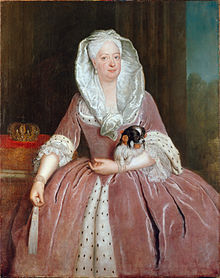
Queen Sophie Dorothea of Prussia.jpg
Sophia Dorothea of Hanover

Frederick William I, Frederick II’s father, was a Calvinist who ruled both his household and kingdom sternly, and did not tolerate foolishness. Frederick II was his oldest surviving son, two sons of which both died in infancy. Sophia Dorothea of Hanover, Frederick’s mother, took care of him and spoke French to him a lot of the time, which in time, sprouted Frederick’s love of French culture. Frederick William’s love towards Frederick II was destroyed when he found out their strongly different personalities. Frederick William I ordered Frederick II to have little education, live a simple Protestant life, and focus on the army, just like himself, but Frederick II defied his father, interested in music, books and French culture, which were forbidden for being sinful and unmanly by his father. Frederick II was beaten and humiliated for his defiance of his father, and did not particularly have a good childhood. At one point, Frederick II attempted to flee with his tutor, Hans Hermann von Katte, but they were caught, and his father forced him to marry Princess Elizabeth of Brunswick-Wolfenbüttel-Bevern, and also beheaded Katte, who was also his best friend. Frederick II was put in prison in the Fortress of Küstrin from September 2nd to November 19th in 1731, and studied agriculture, economy and administration. Frederick II became on all right terms with his father, when he passed away on May 31, 1740 and Frederick came to power as king. Frederick II had to grow up accepting that his father did not like his different ideas and beliefs, but Frederick let them bleed through during his reign.
Frederick William I


Frederick II’s love for the arts helped him lead a better well-rounded nation. While Frederick continued his military studies, under his father, Frederick was writing flute sonatas and letters to Voltaire on the side. In 1739, he published a philosophical falsification of Machiavelli, unaware that he would gain the throne in 1740. He was a poet and writer, and wrote many poems and 30 books, while he composed music. Although Frederick William I did not want Frederick II to wear fancy clothing and be a man, Frederick II wore fanciful clothes and would be considered “gay” surrounded by the Prussian society. When Frederick took over the throne in 1740, he immediately launched a battle in a war, but he had not forgotten about the arts. In 1746, Frederick the Great presented a musical theme he had written to composer Johann Sebastian Bach, who repeated a part of the music over throughout his piece he titled, “The Musical Offering.” The arts Frederick displayed helped people view him as inspiring. This helped his people to appreciate him for his ways of thinking.
Frederick II claimed the throne on May 31, 1740, and not long after that he launched an unprovoked attack on the Austrian region of Silesia. This triggered the eight-year War of Austrian Succession which led to many good things that helped Prussia, and started off Frederick's rule strong. His father had drilled the army to perfection, so Frederick used it to the best of his ability and held Silesia, as well as invaded Bohemia with an army of 140,000. He was driven back by some defeats in Austria, but it led to treaty negotiations in 1748. Following the eight year war, Frederick was considered a military genius and was given the name “Frederick the Great.” Later in 1756, Europe’s longstanding alliances changed around during the so-called Diplomatic Revolution, in which Frederick built up piece as well as his army, in which he attacked Austria’s ally Saxon out of surprise. Frederick built up his daring tactical victories, but the war finally came to end when Russia suddenly withdrew in 1762. Frederick the Great gained fame for his able administration of his country, his cultural interests and attainments, and his organization and leadership of Prussia’s military forces. Frederick proved himself a very great general, in which military men often mention his name in the same breath with the names of Gustavus Adolphus, Hannibal, and Marlborough, which says a lot. Frederick II was a force to be reckoned with, leading Prussia in long strategic wars.
Through Frederick II’s hardship with his father, love for the arts, and great military tactics, Frederick was a very good absolute monarch. Frederick learned a lot from his father, as well as what not to do, having good and strong ideas already in mind when he came to power. His love for the arts made him more versatile, as well as unique. Lastly, his military tactics were strong and powerful, still being looked upon until today. Frederick is often remembered as the father of Prussian militarism, but his reign was much more than that, which made him a good absolute monarch.


Works Cited

 Eyck, Erich. "Frederick the Great." History Today, 1955, pp. 4:10 (Oct. 1954): 651, History Study Center.


"Frederick II, King of Prussia." The Columbia Encyclopedia, Paul Lagasse, and Columbia University,

Columbia University Press, 2017. Credo Reference,
http://literati.credoreference.com/content/entry/columency/frederick_ii_king_of_prussia/
0. Accessed 10 May 2017.
"Frederick II (The Great) of Prussia." Then Again. N.p., n.d. Web. 10 May 2017.
"Frederick William I." The Columbia Encyclopedia, Paul Lagasse, and Columbia University, Columbia
University Press, 2017. Credo Reference,
http://literati.credoreference.com/content/entry/columency/frederick_william_i/0. Accessed 10
May 2017.
Kyte, George W. "Frederick the Great and the Development of the Prussian Army." Historian; a Journal
of History, 1950, pp. 5:1 (Autumn 1942): 24, History Study Center.
Munger, Michel. "Frederick the Great Biography." Mungerca RSS. N.p., n.d. Web. 05 May 2017.

Tuesday, December 13, 2016

John Richardson
History
Block G
Religion Influence on Society in Byzantium and Islam


Islam and Christianity had a significant impact on the formation of society in the age of the Byzantine Empire. Like most religions, Christianity had a defensive nature back then. It also consisted of many different denominations, making the religion more competitive on proving which denomination was “correct” in beliefs. Islam had five essential concepts or ideas that they called the five pillars. (Whitters). This shaped the religion to be more straightforward. In turn, Islam had controversies with other religions and not within their own. In the end, both religions caused society to strongly defend what they believed.

Islam and Byzantine had run-ins with each other during the Muslim Conquests. Byzantium and Persia were weak from fighting each other in a war, so the muslims took advantage of this. They started taking over land all around them. Byzantium was included. The muslims did manage to take some of the Byzantine Empire, but Byzantium held their own. The conquest for the muslims made their religion into an empire. (Sandler) In Islamic states, women were said to be spiritually equal, so this allowed for some loop holes that higher class woman could take to “bend the rules.” (Bardsley) Higher class woman could sometimes get away with with not staying secluded or not wearing veils. Higher class women might not be able to get away with that if muslims did not believe that they were spiritually equal. Another way religion shaped the Islamic society was the five pillars. The first is Shahada or Creed. The second is Salat or Prayer. The third is Zakat or Purification. The fourth is Sawm or Fasting. Finally, the fifth is Hajj or Pilgrimage. Pillars 3-5 have shaped events in society and just society in general. Sawm or Fasting is a sacrificial act of not eating. Zakat or Purification tell people to always give something, even a smile. Pilgrimage is a day where many people gather at a place called Mecca to renew their faith.(Whitters) These are just some of the ways that the Pillars shaped the Islamic society.

The Byzantine Empire’s society was focused around Christianity with multiple denominations in the area. This caused controversy with the Roman Empire. The main religion in the Byzantine Empire was Easter Orthodox, a denomination of Christianity. Constantine legalized Christianity in 313 be and Theodosius made it the official state religion in 380 bc. (Papayianni) The Byzantine Church had frequent arguments with the Roman Church. One in particular argument about people believing icons escalated to the Eastern Orthodox church breaking away from Rome. Byzantine was now a Greek empire. This shows that Byzantium was made more independent by their denomination of christianity.

As already stated, Islam had five main Pillars of their religion that shaped their society. The first was Shahada or Creed. This states that Allah is the only god. This is similar to Christianity's Nicene creed. The first verse reads “We believe in one God, the Father almighty, maker of heaven and earth, of all things seen and unseen.” (Nicene Creed) Allah translates from Arabic to God, so both creeds in each Islam and Christianity say that people should believe in one god. In Islam, Muhammad is  the profit. This is what separates the two. The Shahada is also much shorter. It whole creed reads “There is no god but Allah, and Muhammad is his prophet.” (Whitters) This is something else that separates Islam from Christianity. The Nicene creed is much longer with over 200 words. This leaves room for different interpretation where as the Islamic creed is straightforward and very clear. This caused the Islamic society to not have as much arguments amongst themselves back in the time of the Byzantine empire.
Society in Islamic states and The Byzantine Empire was greatly shaped by their religion. Islam and Christianity have some similarities. One example is that they are both monotheistic, meaning they believe in one God. However, Islam had less variations in beliefs than Christianity, leading to less civil controversies. Muslims were more unified in their society, whereas the society under Eastern Orthodox had to deal with other denominations along with other religions beliefs. Ultimately, both societies were shaped to fight for what they believed in.


Citation:

Bardsley, Sandy. "Islamic Women: Medieval World." Daily Life through History, ABC-CLIO, 2016, dailylife.abc-clio.com/Search/Display/1436056. Accessed 12 Dec. 2016.

Campo, Juan E. “Islam.” Encyclopedia of Islam, Facts On File, 2009, Ancient and Medieval History: Pre-1500, online.infobase.com/HRC/Search/Details/218510?q=Islam.

McBeath, Carter. "Jerusalem." World History: Ancient and Medieval Eras, ABC-CLIO, 2016, ancienthistory.abc-clio.com/Search/Display/662702. Accessed 12 Dec. 2016.

Papayianni, Aphrodite. "Byzantine Empire." World History: Ancient and Medieval Eras, ABC-CLIO, 2016, ancienthistory.abc-clio.com/Search/Display/1349403. Accessed 12 Dec. 2016.

Sandler, Stanley. "Muslim Conquests." World History: Ancient and Medieval Eras, ABC-CLIO, 2016, ancienthistory.abc-clio.com/Search/Display/600840. Accessed 12 Dec. 2016.

Whitters, Mark F. “Pillars of Islam.” Encyclopedia of the Medieval World: 600 to 1450, Facts On File, 2016, Ancient and Medieval History: Pre-1500, online.infobase.com/HRC/Search/Details/215301?q=five pillars of islam.
Jackson Riley

The Byzantine and Islamic Empire were two major empires in history after the fall of Rome.  They are both built upon a religious foundation of Christianity and Islam.  Christianity is a religion where you worship one God and his son has come to earth while Islam also worships one God called Allah, his son however, never came to earth.  Byzantinum was ruled by Justinian and Islam was ruled by Mohammed.  What were the effects of religion on these society's laws and customs?
The islamic law is based off of the five pillars of islam.  The first pillar is called Shahadah and it represents the honest preaching of the Muslim faith, this means that people are sincere about what they believe and to not lie about their religion.  The second pillar is called Salat and it represents the act of prayer in the proper form, five times a day.  The third pillar is called, Zakat which represents charity and tax benefit to the needy, this means that families are required to pay a part of their wealth to charity.  The fourth pillar is named Sawm, which represents Fasting during the month of Ramadan, this is when you cannot eat during a period of time in this case Ramadan.  The fifth pillar is named Hajj which represents Pilgrimage to mecca this means that all muslims must take a trip to Mecca at some point of their life(Tom Sizgorich).  Those are the five pillars that Muslims live by, they were made with words of the Qur’an which is the Islamic Bible.  The laws of the empire is called the Shari’a, this is a chronicle of laws made to govern the empire with direct accordance with the Qur’an, this chronical was made by Caliphates which are the religious leaders of the Empire(Sizgorich).  Crimes in the Islamic Empire were considered sins against Allah and were given severe punishment.  All punishments against criminals are found inside the Shari’a such as stoning, execution, amputation, and lashings.  Criminal procedures followed a judge and trial system, the victim of the crime is put in charge of bringing a claim against the criminal along with evidence for support.  Evidence had to be conclusive in order for the judge to reach a guilty verdict and if the accuser could not bring evidence he could make the defendant swear an oath to Allah that he is innocent, if the defendant swears he is found innocent and if he does not he is found guilty.  Domestic laws are also dealt with a trial but instead of a judge there are Kadis.  Domestic laws are qualified as; violations of religious duties, lawsuits, business disputes, and property disputes.  The setup for domestic trials is the same as the criminal trials except for the Kadis(Origin Islamic Law).  There are more comparisons than differences that the Shari’a and qur’an have.  First off the Shari’a was made using the Five Pillars and the Qur’an and most of the laws described are the same as the ones described in the Qur’an.  Crimes are punished as sins are punished in the Qur’an.  The people who created the Shari’a were caliphates which are descendants of Mohammed the prophet and held a high religious and political status.  For the Islamic Empire religious beliefs played a large role in the making of laws for the community.
The Byzantine Empire’s culture was based around the religion of Christianity.  The church controlled the empire with five patriarchs in charge of the church(Livius).  The text used by the church just like the Qur’an is the Holy Bible which contains testaments of prophets and disciples of God.  There was a set of rules placed for Christians to follow much like the Five Pillars only it’s the Ten Commandments.  The commandments are; have no other God, worship no idols, do not misuse the name of God, keep the sabbath day holy, respect your parents, do not kill, do not commit adultery, don’t steal, do not lie, and lastly do not be envious and love your enemies.  These are the ten rules that Christians are required to follow in relevance with the bible.  The laws of Byzantium was composed in the Justinian Code which was written by Emperor Justinian.  This code is a set of four books that contain the laws that citizens in the kingdom must follow and keep the peace.  Disputes were settled legally in a jurisdiction system, with a trial and judge set in place.  There are two volumes of the Justinian code dedicated to rural and maritime affairs, the Farmer’s Law and Rhodian Sea Law.  The Farmer’s Law would cover pilferage of crops and havoc from wild animals.  Crimes committed in the city have no relation with these volumes however.  If a crime fits under two categories such as abduction, it goes under property and person, these crimes merit a more severe punishment.  The Ecloga is in charge of punishing criminals through financial compensation, imprisonment, or exile for harsh crimes such as rape, stealing, and murder(Rautman).  Most criminal punishments and trials were held by the church due to the fact that the church was the highest power in Byzantium.  The church played a major role in the creation of the Justinian Code because Emperor Justinian transferred most of the power to the church because he believed the church deserved to be the highest power.  In Byzantium religion clearly held the highest position in the empire for the church was the highest political power you could be in.  Because of that religion played a large role in the persecuting of criminals and the law system in general.
Both empires clearly hold religion very high in their eyes and make it their base of everyday life.  Both empires have laws based on the Bible and Qur’an and also have a set of religious rules called the Five Pillars and Ten Commandments.  It seems very clear that these kingdom’s laws were all based off of religious rules and text.  For example the Shari’a does not prevent anyone from being able to perform all Five Pillars in the Islamic Empire and the source for all punishments is from the Qur’an, lastly the political leaders that created the Shari’a were Caliphs which are Successors of Mohammed.  For the Byzantine Empire the church controls the incarceration of criminals along with devising punishments.  Most of the laws inside the Justinian Code are actually parts of the Ten Commandments, such as do not steal and do not commit adultery.  These are some examples of how religion affects the shaping of laws in kingdoms throughout history especially these famous empires.
In conclusion society's laws can be influenced by religion greatly especially if the church holds a lot of political power such as the churches did in Byzantium.  The Islamic and Byzantine Empire are prime examples of this idea due to the fact that their laws are restates of their bibles and the churches there hold the most political power.  This idea of religion playing a major role in development of laws and customs is true, just like the Byzantine and Islamic Empire other kingdoms will be the same way.  This is just how powerful religion can be in societies.


Works Cited

Rautman, Marcus. "Crime and the Law in the Byzantine Empire." World History: Ancient and Medieval Eras, ABC-CLIO, 2016, ancienthistory.abc-clio.com/Search/Display/1715866. Accessed 12 Dec. 2016.

Costly, Andrew. "The Origins of Islamic Law." The Origins of Islamic Law - Constitutional Rights Foundation. Constitutional Rights Foundation, 2006. Web. 12 Dec. 2016.

Editor, Britannica. "Code of Justinian." Encyclopedia Britannica Online. Encyclopedia Britannica, 2002. Web. 12 Dec. 2016.

@ahencyclopedia. "Byzantine Empire." Ancient History Encyclopedia. Ancient History Encyclopedia, 2000. Web. 12 Dec. 2016.

Sizgorich, Tom. "Five Pillars of Islam." World History: Ancient and Medieval Eras, ABC-CLIO, 2016, ancienthistory.abc-clio.com/Search/Display/600867. Accessed 12 Dec. 2016.


Editor, Britannica. "Caliphate." Encyclopedia Britannica Online. Encyclopedia Britannica, 2002. Web. 12 Dec. 2016.
Jack Schamban

Throughout history, religion has impacted society through architecture. Two religions that have manipulated architecture are Islam and Christianity in the Byzantine empire. Both created edifices which shaped the history of architecture, the Byzantines created the Hagia Sophia, meaning Holy Wisdom (Nancy L. Stockdale, Hagia Sophia) and the Muslims created the Al-Masjid, meaning Holy Mosque (Britannica School, Great Mosque). It is clear, religion has molded architecture.
Built in 532, the Hagia Sophia, located in modern day Istanbul was the most complex architectural structure of its time (M. Joseph Costello Potter, “Hagia Sophia”). This church was built with a combination of two techniques, Central plan and rectangular basilica (M. Joseph Costello Potter, “Hagia Sophia”). The Hagia Sophia, meaning “Holy Wisdom”, is remembered for its arches, domes, and columns (Nancy L. Stockdale, Hagia Sophia). The Hagia Sophia has a dome, which rests on a crown. The crown was then placed upon four arches, which in turn was placed on four curved triangle-like structures. The weight on the north and south sides was absorbed by many arches, while the weight on the east and west sides was absorbed by semi domes (M. Joseph Costello Potter, “Hagia Sophia”). The first room, believers entered in was a 200 foot wide hall, after proceeding past the hall an oval with a width of 225 feet appeared. The oval was 107 feet in length and had a shallow dome, above which was 160 feet above the oval (M. Joseph Costello Potter, “Hagia Sophia”). The Hagia Sophia had many openings within the ceiling to light it during the day, with the additional 40 windows in the ceiling (M. Joseph Costello Potter, “Hagia Sophia”). During night the Hagia Sophia was lit with lamps, which illuminated the gold, silver, bronze, and mosaics. With greek-like pillars, and mortar and stone, the Hagia Sophia’s structure has been imitated, by the Europeans and Muslims, but was never the same (Nancy L. Stockdale, Hagia Sophia).
Located in Mecca, the Al-Masjid surrounds the Ka’bah, the holiest of shrines (Britannica School, Great Mosque). The Al-Masjid consists of a courtyard with multiple covered prayer sites, which are visited to complete the Hajj (Britannica School, Great Mosque). These areas are covered by domes (Britannica School, Great Mosque). The four sites are, station of Abraham, the Hijr which is where Ishmael and Hagar are buried, the Zamzam spring, and the Ka’bah (Juan E. Campo, Kaaba). The section of Abraham, has a stone with Qur’an scripture about rebuilding the Ka’bah Ishmael and Zamzam. The Zamzam spring is located between two hills within the courtyard (Britannica School, Great Mosque). The Hijr is a semicircle wall (Juan E. Campo, Kaaba). The Ka’bah is 50 feet high, 40 feet long, and 30 feet deep. Covering this shrine, is black cloth engraved with Qur’an scripture in gold and silver thread (Juan E. Campo, Kaaba). Lit by lamps, the inside of the Ka’bah is filled with scripture from the Qur’an. To enter the Ka’bah worshippers pass through large, decorated doors (Juan E. Campo, Kaaba). The Al-Masjid  is one of the ancient, architectural treasures of the planet.
The Al-Masjid and Hagia Sophia have similar and different parts to it. Both are similar and different. Each structure has domes, and opening allowing light in. The Al-Masjid has a small portion covered for praying with the vast majority of the courtyard unenclosed. On the other side of the spectrum the Hagia Sophia contains many apertures and windows allowing light to penetrate the building. The style of artwork within the Hagia Sophia is much different than the Al-Masjid. The Hagia Sophia has many mosaics and rooms, while the Al-Masjid contains different praying sites which are in an open area. However, both cultures use precious metals in their structures. The Hagia Sophia using gold, silver, and bronze in its mosaics and artwork, is similar to the Al-Masjid which had gold sings woven into the Ka’bah. However, the main difference between the Hagia Sophia and the Al-Masjid is how each is laid out; the Al-Masjid consist of four main components: the Ka’bah, Zamzam spring, Hijr, and the section of Abraham, while the Hagia Sophia has two main rooms. The Hagia Sophia consists of one main corridor and the epicenter of the building. Both structures are similar, yet different both are unique in their own way.
Each structure has religious and historical value to the world. Even though they are 1,732 miles apart each has affected and molded architecture in the subsequent years. Whether one is the pilgrimage site for muslims or it’s an edifice which was the apex of its time, both are unequaled. Religion created the inspiration for these buildings, and in turn both have molded architecture. The Hagia Sophia and the Al-Masjid are architecturally fascinating structures, which were and still are the pinnacle of human genius.
Works Cited
Campo, Juan E. “Kaaba.” Encyclopedia of Islam, Facts On File, 2009, Ancient and Medieval History: Pre-1500, online.infobase.com/HRC/Search/Details/218486?q=Kaaba.
"Great Mosque of Mecca." Britannica School, Encyclopædia Britannica, 21 Mar. 2012. school.eb.com/levels/high/article/544233. Accessed 12 Dec. 2016.
Potter, M. Joseph Costelloe and Dickenson, Edmund. "Building of Hagia Sophia." Great Events from History: The Middle Ages, 477-1453. Ed. Brian A. Pavlac. Hackensack: Salem, 2004. n. pag. Salem Online. Web. 12 Dec. 2016. <http://online.salempress.com>.

Stockdale, Nancy L. "Hagia Sophia." World History: Ancient and Medieval Eras, ABC-CLIO, 2016, ancienthistory.abc-clio.com/Search/Display/1037449. Accessed 12 Dec. 2016.